Creative Fatigue on Meta Ads: How to Spot It and What to Change
Creative fatigue is when an ad stops working because the same people have seen it too often. The signs in Ads Manager, what to change first, and a refresh rhythm.
On this page
Creative fatigue is when an ad that used to work stops working because the people it reaches have already seen it enough. It shows as a steady slide, not a sudden drop: click-through falls week after week, frequency climbs, and cost per purchase rises while nothing else in the account has changed. The fix is new creative that changes the hook or the angle, not a new audience for the same tired ad.
Key takeaways
- Fatigue is a trend over weeks: falling CTR, rising frequency, rising cost per purchase.
- One bad day is noise. Two or three weeks of decline on the same ad is fatigue.
- Change the first three seconds or the headline first; that is what tired viewers skip.
- Keep winners running and add new ads beside them, rather than replacing everything at once.
- Judge refreshes on kept orders from Shopify, not on Ads Manager purchases alone.
What creative fatigue looks like
Every ad has a life. In its first weeks it reaches the people most likely to respond, and results are good. As Meta's delivery system works through that pool, it shows the ad to the same people more often and to people less interested in it. Engagement falls, and Meta's auction tends to charge you more for an ad people ignore.
In Ads Manager, the pattern on a single ad looks like this:
| Week | Frequency (7 days) | CTR (link) | Cost per purchase |
|---|---|---|---|
| 1 | 1.4 | 1.8% | ₹420 |
| 2 | 1.9 | 1.6% | ₹450 |
| 3 | 2.6 | 1.3% | ₹520 |
| 4 | 3.3 | 1.0% | ₹640 |
| 5 | 3.9 | 0.8% | ₹760 |
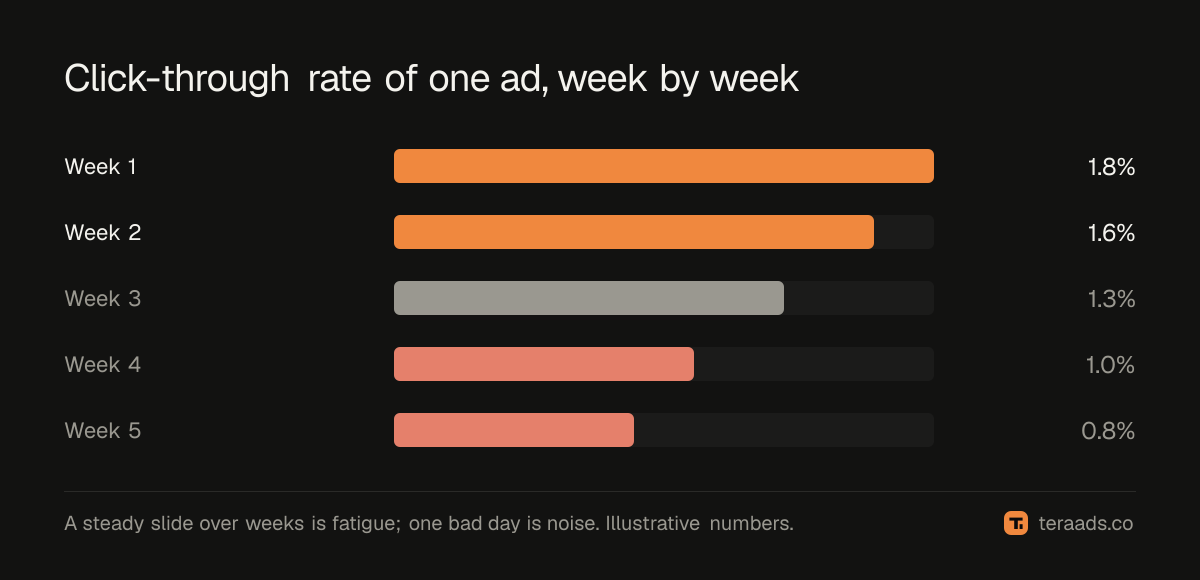
The frequency guide covers how to read frequency itself. The point here is that fatigue shows up across several numbers moving together.
Fatigue or something else?
Rising costs don't always mean the creative is tired. Rule out the other causes first:
- Seasonal CPM rises. Before big sale periods, CPMs rise for everyone. Check whether every ad got more expensive, not just the old one.
- Learning resets. A significant edit sends an ad set back into learning, which raises costs for a while. See the learning phase guide.
- Site problems. A slow checkout, a stock-out or a broken discount raises cost per purchase while CTR stays healthy. If CTR holds and conversions fall, look at the site, not the ad.
- Tracking gaps. If Shopify orders are steady but Meta reports fewer purchases, it's a measurement problem.
Fatigue is the likely cause when CTR falls on that specific ad while newer ads in the same ad set hold up.
What to change first
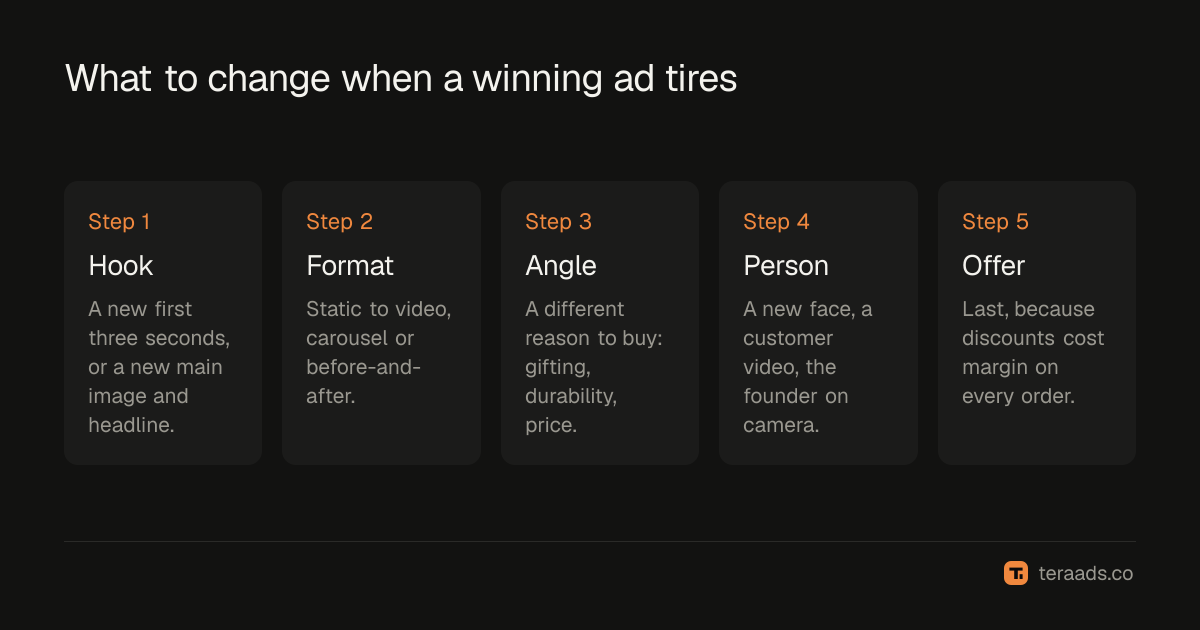
Not every part of an ad tires at the same speed. Viewers who have seen an ad before skip it in the first second, so the opening is where a refresh earns the most.
- The hook. The first three seconds of a video, or the main image and headline of a static ad. A new opening on the same body often revives an ad.
- The format. Turn a static winner into a short video, a carousel or a before-and-after. Same message, new shape.
- The angle. Lead with a different reason to buy: gifting instead of self-purchase, durability instead of design, price instead of quality.
- The person. A new face, a customer video, a founder talking to camera.
- The offer. Change it last. Discounts revive results fast but cost margin on every order, including people who would have bought anyway.
A refresh rhythm that doesn't break learning
Replacing every ad at once throws away what works and can reset learning. A steadier rhythm:
- Keep two to four proven ads running in each main ad set.
- Add one or two new ads a week, in a planned batch, not in reaction to one bad day.
- Pause an ad only when it has clearly declined for two or three weeks and newer ads are carrying the spend.
- Retire, don't delete. Keep old winners paused; a rested ad can work again months later for a fresh audience.
Small brands can stretch this to every two weeks. Brands spending heavily on prospecting often need new creative more often, because big budgets burn through audiences faster.
How to judge a new creative
New ads get a short test, so judge them on the numbers that move first and confirm with the ones that matter:
- Early read (first few days): thumb-stop rate or hook rate for video, CTR, and cost per add-to-cart.
- Real read (after a week or so of spend): cost per purchase and, most importantly, kept orders. Meta counts purchases that are later cancelled or returned as RTO, so a creative that attracts impulse COD orders can look better than it is. True ROAS after RTO and COD explains the gap.
A creative that wins on CTR but loses on kept orders is a click magnet, not a winner. If you've never checked which ads lose money after returns, the wasted-spend audit shows how.
Building a creative pipeline
Fatigue never stops, so the answer is a pipeline, not a one-off refresh:
| Source | What it gives you | Effort |
|---|---|---|
| Customer reviews and photos | Real proof, new faces | Low |
| Founder or team videos | Trust, story | Low to medium |
| Variations of current winners | New hooks on proven bodies | Low |
| Creator content | Native-looking ads, new angles | Medium |
| Studio shoots | Polished product imagery | High |
Most brands get the best return from the first three rows: they are cheap, fast and grounded in what already works.
Tera Ads shows every Meta Ads and Google Ads campaign in one table with profit worked out from your Shopify orders after returns, and its Meta deep dive includes the creatives that still work. It is free for one business.
Frequently asked questions
How long does a Meta ad last before fatigue?
There's no fixed lifespan. It depends on budget, audience size and the creative itself. Small budgets on broad audiences can run one ad for months; heavy prospecting spend can tire an ad in a few weeks. Watch the trend, not the calendar.
Should I duplicate a fatigued ad?
Duplicating the same creative rarely helps, because the same people have already seen it. Change the hook, format or angle instead.
Is creative fatigue the same as audience fatigue?
They're related. Creative fatigue is one ad tiring; audience fatigue is the whole pool being saturated, usually because the audience is small. If every ad in an ad set tires quickly, the audience is the problem.
How many new ads should I add each week?
For most small and mid-sized brands, one or two new ads per main ad set each week or two is enough. Add them in planned batches so the ad set isn't constantly disrupted.
Does a discount fix creative fatigue?
It can lift results quickly, but it costs margin on every order. Try a new hook or angle first, and keep discounts for when the offer itself is the message.